Sales Inquiries: (508) 321-5425
Client Support: (508) 324-9475

Data Backup and Disaster Recovery Services in New Bedford, MA
MTSi protects South Coast organizations with proven backup architecture, tested recovery plans, and senior engineers who have secured business-critical data for New Bedford area clients since 1998.
New Bedford Businesses Cannot Afford to Discover Their Backup Does Not Work
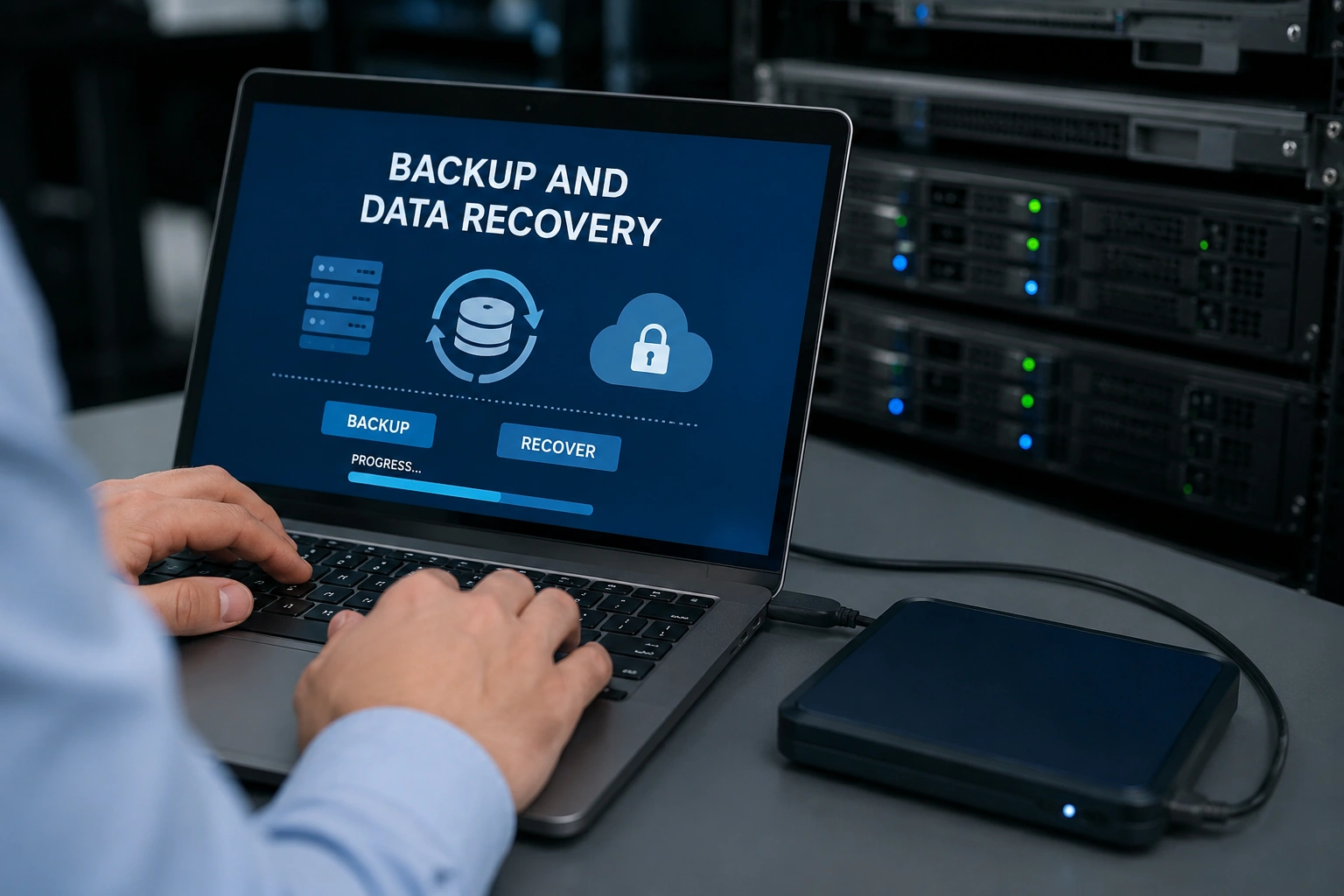
Data loss is not a theoretical risk for New Bedford businesses. Healthcare organizations on the South Coast handle protected patient records subject to HIPAA. Government agencies and municipalities manage sensitive documents that cannot simply be recreated. Financial services firms, insurance agencies, and professional services companies hold client data that represents both regulatory obligation and competitive advantage. When ransomware hits, when a server fails without warning, or when a natural disaster takes a building offline for days, the question is not whether your data was backed up. The question is whether that backup is current, complete, accessible, and genuinely recoverable in the time your operations can afford to wait. Data backup and disaster recovery services in New Bedford, MA from MTSi are built around that question and work as a critical part of a broader managed IT services strategy. Everything MTSi designs, tests, and manages is oriented toward one outcome: restoring your business to full operation as quickly as possible, with as little data loss as possible, regardless of how the disruption occurred.
The gap between having a backup and having a functional disaster recovery program is wider than most New Bedford businesses realize until they face an actual incident. Unmonitored backups fail silently. Backups that have never been tested for restore often fail during recovery precisely when they are needed most. Backup copies stored only on-site are destroyed or encrypted alongside primary data during ransomware attacks. And backup solutions implemented without regard for recovery time objectives frequently leave businesses waiting days for data to become usable when their operations can tolerate hours at most. MTSi addresses every layer of this problem. As an IT company and MSP serving the New Bedford area since 1998, MTSi brings senior-level engineering, detailed documentation, and continuous monitoring to every backup and disaster recovery program it builds, so the protection is real rather than theoretical.
What MTSi Delivers
Backup assessment and data protection strategy development, including inventory of all data sources, systems, and regulatory requirements specific to your New Bedford organization.
Local and on-site backup solutions using enterprise-grade appliances and software configured to your retention and recovery needs.
Cloud backup and offsite data replication to geographically separate storage that protects against site-level disasters, ransomware, and hardware failure.
Hybrid backup architecture combining on-site appliances with cloud replication for fast local restores and resilient offsite copies.
Ransomware-resilient backup design with immutable storage, air-gap principles, and encryption to prevent attackers from destroying recovery options.
Disaster recovery planning and business continuity documentation aligned to your operational priorities and regulatory obligations.
Recovery time objective (RTO) and recovery point objective (RPO) planning to define and meet the specific recovery standards your business requires.
Backup monitoring, scheduled verification, and restore testing to confirm that every backup is functional and every recovery procedure works as documented.
How MTSi Delivers Data Backup and Disaster Recovery Services in New Bedford, MA
MTSi's approach to data backup and disaster recovery services in New Bedford, MA starts with understanding what your business actually needs to survive a loss event. That means identifying every system, application, and data source your operations depend on, assessing the regulatory requirements that apply to your industry, and establishing clear, documented recovery objectives before a single piece of backup software is deployed. Most organizations that have inadequate data protection did not arrive there through negligence. They arrived there because backup was treated as a checkbox rather than a program, and nobody with genuine expertise ever sat down to define what recovery actually needed to look like. Micro Technology Solutions, Inc. fixes that starting point. The team conducts a comprehensive assessment, defines your RTOs and RPOs in writing, and builds a backup architecture that is specifically sized and configured for your environment, not pulled from a template designed for a different kind of organization entirely.
The result is a backup and disaster recovery program that is tested, documented, and monitored continuously. MTSi implements multi-layered backup solutions that protect data at the file level, the application level, and the system level, giving recovery options that range from restoring a single deleted file to spinning up an entire environment in the cloud when a physical office is inaccessible. Each backup destination is monitored for completion, error, and integrity. Restore tests are scheduled on a documented cadence, with results recorded to verify that recovery is actually achievable rather than assumed. For New Bedford organizations in regulated industries, MTSi aligns the entire backup and disaster recovery program to the relevant compliance framework, whether that means HIPAA-compliant data handling and retention, NIST-aligned cybersecurity controls, or the documentation standards required for financial services or government operations. The engineering is done by senior professionals who know the difference between a backup solution that looks complete on a report and one that will actually work when needed.
What New Bedford Businesses Experience When Data Protection Falls Short
The pattern is consistent across industries. A New Bedford business runs for years with a backup solution that was implemented once and never meaningfully revisited. The IT support relationship is reactive, focused on keeping the lights on day to day, and backup monitoring falls through the cracks. Nobody has run a restore test in two years. The backup appliance on-site filled up six months ago and has been silently failing ever since. Then something happens: a ransomware attack encrypts every file on the network, including the local backup copy. Or a server's storage array fails catastrophically and the most recent cloud backup is four days old because the scheduled job has been erroring out without generating an alert. Or the building floods and the on-site hardware is destroyed along with everything stored on it. At that moment, the gap between what the business believed about its backup and what is actually recoverable becomes very expensive. Days of downtime, lost client records, regulatory exposure, and in some cases permanent data loss that cannot be undone regardless of how much money or effort is applied.
The businesses most at risk are often the ones that feel most confident about their data protection. If a backup solution has been running quietly in the background for years without visible problems, it is easy to assume it is working. That assumption is exactly what ransomware groups, hardware vendors, and post-incident IT consulting teams encounter most often when called in after a failure. The cybersecurity implications of inadequate backup are significant on their own: a business without a functioning, tested, and ransomware-resilient backup is a business that will likely pay a ransom when attacked, because the alternative is worse. This is why reliable Data Backup and Disaster Recovery Services in New Bedford, MA are critical for businesses that need to know their data can actually be restored when something goes wrong. MTSi's IT services address this risk systematically, not after the fact. Every backup and disaster recovery program MTSi manages includes the monitoring, testing, and documentation required to detect problems while they are still correctable, rather than discovering them during an actual recovery attempt.
Why New Bedford Businesses Choose MTSi for Data Backup and Disaster Recovery Services
MTSi has served South Coast Massachusetts organizations since 1998, helping businesses protect critical data, reduce downtime, and prepare for unexpected disruptions. New Bedford's business community includes healthcare providers, municipalities, financial services firms, insurance agencies, and professional services companies, each with different compliance, security, and business continuity requirements. MTSi designs Data Backup and Disaster Recovery Services in New Bedford, MA around those specific needs, combining secure cloud backups, off-site data replication, recovery planning, backup monitoring, and restore testing to help ensure important systems and files remain recoverable. Rather than relying on a one-size-fits-all backup solution, MTSi considers factors such as HIPAA compliance, data retention requirements, recovery time objectives, recovery point objectives, ransomware protection, and the operational impact of extended downtime.
New Bedford businesses also choose MTSi because data protection is managed as an ongoing business continuity strategy, not simply a backup task. Senior engineers review backup architecture, verify cloud replication, test data restoration, document disaster recovery procedures, and identify potential recovery gaps before they become serious problems. As an MSP and IT consulting partner, MTSi maintains clear recovery priorities, current contact information, documented procedures, and testing records while updating the disaster recovery plan as the client's technology environment changes. This combination of proactive backup management, cybersecurity expertise, disaster recovery planning, and continuous monitoring gives organizations a more reliable path to restoring systems, recovering critical data, and returning to normal operations after ransomware, hardware failure, accidental deletion, or other disruptive events.
Our Data Backup and Disaster Recovery Services
MTSi's data backup and disaster recovery services are built for South Coast Massachusetts organizations that cannot afford the difference between a backup that looks like it is working and one that actually works under pressure. Every component below is part of a layered, tested, and continuously monitored program that Micro Technology Solutions, Inc. engineers design, implement, and verify against your specific recovery requirements.
New Bedford organizations across healthcare, government, financial services, and professional services have distinct data volumes, regulatory obligations, and operational recovery timelines. MTSi designs each program specifically for the organization it serves, rather than applying a template that fits nobody precisely. The result is a backup and disaster recovery program that reflects how your business actually operates, what it genuinely needs to recover, and how quickly it actually needs to be back online when something goes wrong.
Backup Assessment and Data Protection Strategy
The foundation of effective data backup and disaster recovery services is knowing exactly what needs to be protected before choosing how to protect it. MTSi begins every engagement with a structured assessment that inventories all data sources, applications, servers, and endpoints across your New Bedford environment, identifying what is business-critical, what is regulatory-sensitive, and what recovery obligations apply to each category. This assessment produces a written data protection strategy that defines backup targets, retention schedules, recovery objectives, and compliance requirements in a single reference document that guides every subsequent decision. Too many organizations discover backup gaps only during a recovery attempt; the assessment eliminates that risk by surfacing gaps while there is still time to address them.
Full inventory of data sources, servers, applications, and endpoints across your New Bedford environment, with classification by business criticality and regulatory sensitivity.
Identification of applicable compliance requirements, including HIPAA, NIST cybersecurity controls, and financial services data retention standards relevant to South Coast organizations.
Written data protection strategy defining what is backed up, how frequently, to which destinations, and for how long based on your specific recovery and compliance requirements.
Gap analysis comparing current backup practices against documented recovery objectives, identifying deficiencies that create unacceptable recovery risk.
Local and On-Site Backup Solutions
On-site backup provides the fastest restore option available because data does not need to travel across a network connection to be recovered. As part of MTSi's Data Backup and Disaster Recovery Services in New Bedford, MA, local backup solutions are designed and implemented using enterprise-grade appliances and software configured to your environment's data volumes, system complexity, and recovery speed requirements. Local backup targets are configured with appropriate redundancy, monitored continuously for job completion and error conditions, and sized to accommodate your data growth without requiring constant manual intervention. For New Bedford organizations that need to restore individual files, databases, or entire servers quickly, the local backup tier is what makes that possible without a lengthy cloud retrieval process that adds hours to an already stressful incident.
Enterprise-grade local backup appliances and software configured for your specific data volumes, system architecture, and recovery speed requirements.
Scheduled backup jobs covering servers, workstations, databases, and business-critical applications with frequency appropriate to your RPO targets.
Continuous monitoring of local backup jobs for completion, errors, and storage capacity to catch failures before they become undetected recovery gaps.
Documented restore procedures for common local recovery scenarios, including single-file recovery, database restore, and full system recovery with verified recovery timelines.
Cloud Backup and Offsite Data Replication
A backup that exists only on-site is not protected against the scenarios where data protection matters most: ransomware that encrypts local storage, hardware theft, fire, flooding, or any event that takes the physical office offline. MTSi implements cloud backup and offsite data replication to geographically separate storage as a core component of every data protection program, ensuring that a site-level disaster does not also destroy the only recoverable copy of your data. Cloud backup destinations are configured for your retention requirements, encrypted in transit and at rest, and monitored for successful replication on the same schedule as local backups. For New Bedford businesses with HIPAA, financial services, or government compliance requirements, cloud storage is selected and configured to meet the applicable regulatory standards, with documentation supporting audit readiness.
Cloud backup replication to geographically separate storage, ensuring that a site-level disaster does not eliminate recovery options for New Bedford area businesses.
Encryption in transit and at rest for all cloud-stored backup data, meeting HIPAA, NIST cybersecurity framework controls, and other applicable compliance standards.
Configurable retention schedules aligned to regulatory data retention requirements and operational recovery needs, with long-term archiving for regulated data categories.
Monitoring and alerting for cloud replication jobs, with documented escalation procedures for replication failures and integrity verification on a scheduled cadence.
Hybrid Backup Architecture and Redundant Storage
The most resilient data protection programs use multiple backup tiers working together rather than relying on a single method for all scenarios. MTSi architects hybrid backup solutions that combine on-site appliances for fast local restores with cloud replication for offsite resilience, creating a layered program where different failure scenarios are addressed by the appropriate recovery method. A corrupted database can be restored from the local appliance in minutes. An office destroyed by a disaster can be recovered from the cloud. A file deleted two weeks ago can be located in the retention archive regardless of whether the current local backup has already overwritten it. This architecture is particularly valuable for New Bedford organizations in healthcare, government, and financial services where both recovery speed and long-term data retention are explicit requirements of the regulatory frameworks that apply to them.
Layered backup architecture combining on-site appliances and cloud replication for full coverage across hardware failure, ransomware, site-level disaster, and accidental deletion scenarios.
Fast local restore capability for common recovery events, reducing downtime to minutes rather than hours for the majority of incidents.
Offsite cloud copy providing verified recovery options when the physical office is inaccessible, damaged, or affected by ransomware or a cybersecurity incident.
Long-term retention tiers for regulatory compliance and historical data access, configured to your specific industry obligations and data classification requirements.
Ransomware Recovery and Cyber-Resilient Backup Design
Ransomware is the scenario where the design of a backup program is most consequential, and where most conventional backup solutions fall short. Attackers who target New Bedford organizations typically spend time inside the network before encrypting files, specifically locating and destroying or encrypting accessible backup copies before deploying their payload. A backup solution that was adequate against hardware failure may be completely inadequate against ransomware because the attacker had the same network access to the backup that they had to everything else. MTSi designs backup programs with ransomware resilience as an explicit requirement, implementing immutable backup copies that cannot be modified or deleted by anything with network access, air-gap principles that keep at least one backup copy isolated from network-accessible systems, and cybersecurity-aware configuration that treats backup integrity as a security control rather than an administrative checkbox.
Immutable backup copies configured to prevent modification or deletion by ransomware or any network-accessible process, ensuring at least one clean copy survives an attack.
Air-gap principles applied to at least one backup tier, ensuring a recoverable copy exists even when all network-accessible systems have been compromised.
Cybersecurity review of backup architecture to identify and close access paths that ransomware commonly uses to destroy recovery options before encrypting primary data.
Documented ransomware response procedures integrated with disaster recovery planning, covering containment, assessment, backup integrity verification, and recovery sequencing.
Disaster Recovery Planning and Business Continuity Documentation
Backup technology is only one component of a functional disaster recovery program. The other component is documentation: written recovery procedures specific enough that the right people can execute them correctly under pressure, without having to improvise steps or locate credentials in the middle of an active incident. MTSi develops disaster recovery plans and business continuity documentation for New Bedford organizations that cover recovery priorities, step-by-step procedures for each covered scenario, contact lists, vendor information, escalation paths, and the decisions that need to be made at each stage of a recovery event. This documentation is maintained and updated as your environment changes, reviewed annually or whenever a significant change occurs, and stored in locations accessible both locally and from outside the affected site so it can be reached even when the primary office is offline.
Written disaster recovery plan covering prioritized recovery sequences, step-by-step procedures with specific technical detail, and decision criteria for each covered failure scenario.
Business continuity documentation covering operational continuity during recovery, including temporary workarounds, communication protocols, and stakeholder notification procedures.
Contact lists, vendor information, escalation paths, and access credential records stored in accessible, redundant locations that remain reachable during a site-level event.
Annual review and update of all disaster recovery documentation to reflect changes in your environment, personnel, systems, and operational priorities.
Recovery Time and Recovery Point Objective Planning
Recovery time objectives and recovery point objectives are the technical specifications that define what a backup and disaster recovery program is actually built to achieve. The RTO defines the maximum time your business can be offline before the disruption becomes operationally unacceptable. The RPO defines the maximum amount of data loss your business can absorb, expressed as the age of the most recent recoverable backup at the time of the incident. Without defined RTOs and RPOs, there is no standard against which to evaluate whether a backup program is adequate because adequacy is measured against specific recovery requirements, not against software feature lists. As part of MTSi's Data Backup and Disaster Recovery Services in New Bedford, MA, the team works with New Bedford organizations to establish realistic RTOs and RPOs for each system and data category, then designs and validates that the backup architecture can actually meet those objectives under real recovery conditions, not just under ideal assumptions.
Structured RTO and RPO definition process, translating business recovery requirements into specific technical targets for each system and data category across your environment.
Backup architecture validation confirming that the designed recovery methods can achieve defined RTOs and RPOs under realistic recovery conditions and representative data volumes.
Tiered recovery objectives for different system categories, recognizing that not all applications require the same recovery speed or data currency as core business systems.
Documentation of RTOs and RPOs in disaster recovery plans, with clear reference to the backup methods and tested procedures that are expected to achieve each defined objective.
Backup Monitoring, Verification, and Restore Testing
A backup that has never been successfully restored is a backup whose reliability is unknown, and unknown reliability is not protection. MTSi treats backup monitoring, verification, and restore testing as non-negotiable program requirements, not optional additions to a baseline service. Every backup job is monitored for completion and error on a scheduled basis, with alerts that surface failures quickly rather than waiting for a periodic review cycle. Backup integrity is verified regularly, not just assumed from a completion status that may not reflect actual data recoverability. Restore tests are conducted on a documented schedule, with results recorded to create an auditable history that the backup program works as designed. When testing identifies a problem, it is corrected and retested before the issue is considered resolved. For New Bedford organizations with compliance obligations, the documented testing history is also an audit artifact that demonstrates ongoing data protection diligence to regulators, cyber liability insurers, and internal stakeholders.
Continuous monitoring of all backup jobs for completion, errors, and storage capacity, with alert protocols that surface failures before they compound into undetected multi-week gaps.
Scheduled backup integrity verification confirming that backup data is not corrupted and is genuinely recoverable rather than simply present in a destination folder.
Documented restore testing on a scheduled cadence, with recorded results as part of ongoing backup program management and compliance documentation.
Audit-ready testing records supporting compliance verification for HIPAA, NIST cybersecurity framework requirements, financial services standards, and government regulatory obligations.
Protect Your Business Before Data Loss Becomes Downtime
Your backup strategy should do more than store copies of your data. It should give your business a clear, tested path to recovery when ransomware, hardware failure, accidental deletion, or another disruption occurs. MTSi provides Data Backup and Disaster Recovery Services in New Bedford, MA designed to help businesses protect critical information, reduce downtime, and restore operations with confidence. Connect with MTSi today to discuss your backup, business continuity, and disaster recovery needs and build a data protection strategy that is ready when your business needs it most.
Frequently Asked Questions
How is MTSi's backup and disaster recovery program different from a basic cloud backup subscription?
A standalone cloud backup subscription stores copies of your data, but it does not define recovery objectives, test restores, monitor for failures, or provide a written recovery plan. MTSi's program covers the full lifecycle: assessment, architecture design, implementation, monitoring, testing, and documentation. The goal is not just to have a backup but to have a verified, tested, and documented recovery capability that meets specific RTOs and RPOs aligned to how your business actually operates and what it genuinely needs to recover from a loss event.
How do you protect backups from ransomware?
MTSi designs backup programs with ransomware resilience as an explicit requirement. This includes immutable backup copies that cannot be modified or deleted by network-accessible systems, air-gap principles applied to at least one backup tier, and a cybersecurity review of the backup architecture's access controls to close the paths ransomware commonly exploits before deploying its payload. The backup program's cybersecurity configuration is reviewed as part of the same discipline applied to the broader IT security and network protection environment.
How often should we test disaster recovery procedures?
MTSi recommends scheduled restore testing at least quarterly for business-critical systems, with full disaster recovery procedure walkthroughs conducted at least annually. The right cadence also depends on how frequently your environment changes: a significant infrastructure change, a new application deployment, or a change in the personnel responsible for recovery procedures are all triggers for retesting. Results are documented to create an auditable record of ongoing backup program performance and to demonstrate compliance readiness.
What is the difference between a backup and a disaster recovery plan?
Backup refers to the technology and process of creating and maintaining recoverable copies of data. Disaster recovery planning is the documentation, decision-making framework, and procedural structure that tells your organization how to use those backups to restore operations after a disruption. Both are required. A backup without a tested recovery plan frequently fails to produce timely recovery in real incidents because the steps for using the backup correctly under pressure have never been worked out and verified in advance, and the people who need to execute recovery have never practiced the procedures.
Can you help if we already have a backup solution in place?
Yes. MTSi frequently works with New Bedford businesses that have existing backup tools that have never been properly assessed, tested, or documented. The starting point is an assessment of what is currently in place, what it covers, and where gaps exist relative to your actual recovery requirements. From there, MTSi recommends modifications, additions, or replacements based on what your program needs to meet your RTOs, RPOs, and applicable compliance obligations. Many organizations find that their existing tools are adequate once properly configured, monitored, and tested.
How does data backup and disaster recovery relate to cybersecurity?
Data backup and disaster recovery services New Bedford Massachusetts organizations rely on are directly connected to cybersecurity posture. A functional, ransomware-resilient backup program is one of the primary factors that determines whether a business can recover from a ransomware attack without paying. Cyber liability insurance carriers increasingly require evidence of tested backup and recovery programs as a condition of issuing or renewing coverage. MTSi integrates backup architecture review into its broader cybersecurity work, treating data protection as part of the overall security posture rather than a separate administrative function managed independently.
Do you serve industries with specific compliance requirements like HIPAA or government data standards?
Yes. MTSi serves healthcare organizations, municipal government agencies, financial services firms, insurance agencies, nonprofits, and professional services businesses throughout the New Bedford area and South Coast Massachusetts. Each of these industries carries distinct data protection and retention requirements. MTSi's backup and disaster recovery programs are designed with applicable compliance frameworks in mind, including HIPAA-compliant data handling, NIST cybersecurity framework alignment, and the documentation standards required for government and financial services regulatory reviews and audits.
How We Deliver Exceptional Managed IT Services
Our approach to managed IT services is built around precision, consistency, and experience. We do not rely on scripts or shortcuts—we assign senior engineers, implement best practices, and support each client with a structure that scales as their needs grow.
Strategic Onboarding
We complete a comprehensive review of infrastructure, workflows, systems, and risks to deliver support aligned with operations, accelerating value.
Senior-Level Support
Experienced engineers handle every request and issue directly, resolving problems quickly and accurately without delays, escalations, or reliance on junior technicians.
Proactive Maintenance
We apply structured patching, live monitoring, and scheduled performance reviews to reduce downtime, eliminate recurring issues, and keep infrastructure secure.
Clear Documentation
Every system is documented in detail—from access credentials to network maps—so our team can provide accurate, informed support with zero time wasted.
FAQs About Our Managed IT Services
How Often Should Managed IT Providers Review Your Systems?
A quality provider should review infrastructure quarterly, addressing performance, risks, and improvement opportunities. These reviews help align IT with your business needs.
What’s The Difference Between Help Desk And Managed IT Services?
Help desk support is reactive and ticket-based. Managed IT services include proactive maintenance, monitoring, planning, and direct oversight of your entire IT environment.
Can Managed IT Services Support Hybrid Or Remote Teams?
Yes. Managed IT services include secure remote access, cloud integration, VPN support, and collaboration tools to keep distributed teams connected and protected.
What Happens During Onboarding With A New Managed IT Provider?
A full environment assessment, documentation process, and knowledge transfer occur. Systems are reviewed, risks are identified, and long-term support plans are developed.
Are Managed IT Services Still Needed With Internal IT Staff?
Yes. Many organizations use managed IT services to augment internal teams, cover gaps, add expertise, and manage areas like cybersecurity, compliance, or infrastructure.
FAQs About Our Managed IT Services
Is switching MSPs difficult? Will it impact my team?
No. We have developed and refined an onboarding process to minimize disruption for your team. We recommend an overlap period with your current provider (based on the size of your organization), so we can receive documentation and access to your systems and transition your devices to our cybersecurity tools. Your users may notice new software agents installed on their computers and will have new numbers to contact for support. Otherwise, there should be minimal disruption.
How quickly can I get started?
Staff can depart quickly and leave you in a bind. We can help. The first step is to schedule a fifteen-minute call with us to determine if our service is a fit. Next, we proceed to discovery, which could be a call or an on-site network assessment. Once this is done, we will meet to discuss our findings and to make recommendations for any system or security upgrades. We will also discuss ongoing managed services and a timetable for moving forward.
Will my current MSP be upset when I tell them I’m switching?
No one likes to lose a customer, but established firms understand this is part of working with any client. They have procedures in place to make the transition from one provider to another go smoothly. If you are concerned that your current provider won’t act professionally, that is a good reason to look for a new provider.
Do you charge more for on-site support?
Our rates are the same for on-site and remote support. We charge remote support in 15-minute increments, so remote support is ideal for simple issues. We do charge travel for on-site support, but many clients prefer scheduled visitation. Some technical issues require an on-site visit.
Do you outsource your helpdesk overseas?
MTSi has been based in Massachusetts since 1998 and our support team is located in our Fairhaven office. When you speak to someone at MTSi, they are in our Fairhaven office or working remotely from home (always in the United States).
How much does the service cost?
Compared to other professional IT companies, our pricing is very competitive. We custom tailor our pricing to each customer, so we need to get to know you and your firm before giving you a price. The first step is to schedule an introductory call with us.
What happens if my network goes down in the middle of the night?
That is completely up to you. We will work with you during implementation to understand which systems need attention off hours (if any), who needs to be notified, how we can get building access, etc. We will document this protocol and follow it for any event that occurs outside normal working hours.
I don’t have a CIO (or anyone in IT). Can you help with IT planning?
Yes. We provide an IT Roadmap for our customers and help them manage their systems lifecycle. Having End-of-Life systems is a significant cybersecurity risk, so when a manufacturer announces and End-of-Life date for a product our customers use, we meet with them well in advance of the End-of-Life date to discuss alternatives and upgrades. This helps our customers budget well in advance for upcoming projects and avoid surprise expenses that can break the budget.
Get Expert IT Services in New England with MTSi – Your Trusted Partner
At MTSi, we specialize in delivering top-tier IT Services in New England that help businesses streamline operations, enhance security, and scale efficiently. With our proven expertise, we guide businesses through every stage of the technology journey—from initial planning and deployment to ongoing management and optimization. Our team works closely with you to tailor solutions that align perfectly with your unique business goals, ensuring long-term success and minimal disruption. With a focus on security, reliability, and cost-effectiveness, MTSi is your trusted partner for seamless IT services. Connect with us today to explore how we can help you harness the power of expert IT to drive growth and innovation in your business.
Call (508) 321-5425 today or click the button below to schedule your appointment. Let's take IT off your mind for good.